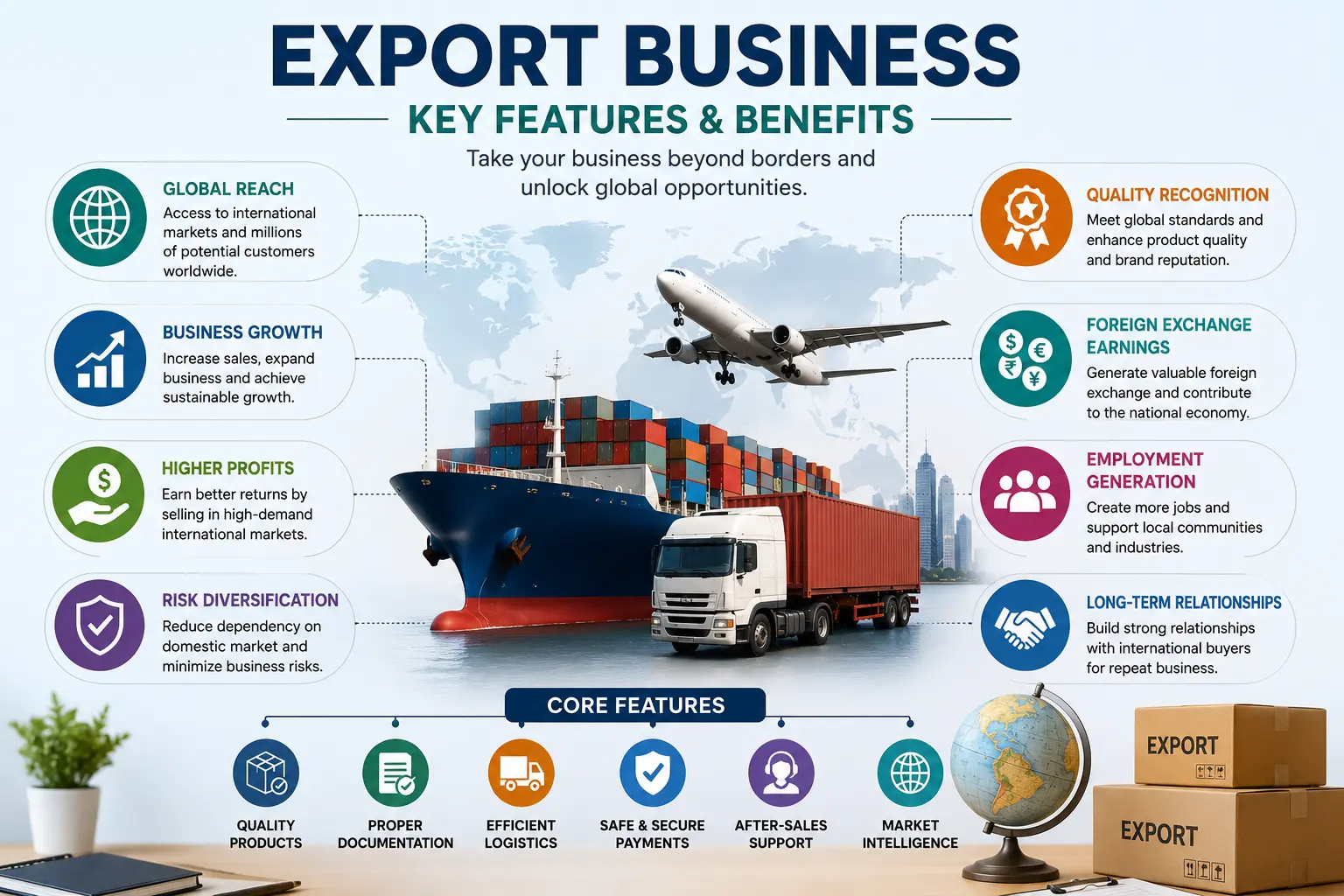
Export business is one of the most important parts of international trade. It allows businesses to sell products and services to customers in different countries, creating opportunities for growth, higher revenues, and global brand recognition. With the growth of e-commerce, digital marketing, and international logistics, starting an export business has become more accessible to small and medium-sized businesses.
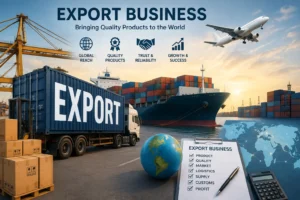
What Is an Export Business?
An export business involves selling products or services from one country to customers or businesses in another country. For example, an Indian company may export textiles, handicrafts, spices, food products, leather goods, furniture, or engineering products to customers in the United States, Europe, the Middle East, or other international markets.
Exporting can be done directly to international customers, through distributors, wholesalers, retailers, or online marketplaces.
Why Is Export Business Important?
Export businesses contribute significantly to economic development. They help businesses reach larger markets beyond their domestic customers. Successful exporters can increase sales, diversify their customer base, and build long-term international relationships.
For developing countries such as India, exports also generate foreign exchange and create employment opportunities. Small businesses can use international markets to expand their operations and develop globally recognized brands.
Popular Products for Export
Different countries have different demands, but some commonly exported products from India include:
- Textiles and garments
- Handicrafts and home décor
- Spices and food products
- Leather products
- Furniture and wooden products
- Jewelry and fashion accessories
- Agricultural products
- Engineering goods
- Pharmaceutical products
- Beauty and personal-care products
The best product depends on market demand, competition, quality requirements, regulations, and shipping costs.
How to Start an Export Business
Starting an export business requires proper planning and research. First, an entrepreneur should select a product with good international demand. The next step is to research potential countries and understand their customers, competitors, import regulations, and pricing.
After selecting a market, the business should complete the necessary registrations and documentation required for exporting. It is also important to find reliable suppliers, maintain consistent product quality, calculate shipping and customs costs, and establish suitable payment terms.
Finding international buyers is another major part of the process. Businesses can use websites, B2B platforms, trade exhibitions, social media, digital advertising, email marketing, and professional networking to connect with potential customers.
The Role of Digital Marketing in Export Business
Digital marketing has transformed the way exporters find international buyers. A professional website can showcase products, certifications, company information, and contact details. Search engine optimization (SEO) can help potential buyers discover the business through search engines.
Social media platforms such as Instagram, Facebook, LinkedIn, and YouTube can also be used to demonstrate products, share customer experiences, showcase manufacturing processes, and build trust.
For B2B exporters, LinkedIn and professional email marketing can be particularly useful for reaching importers, distributors, wholesalers, and purchasing managers.
Challenges in Export Business
Although export business offers significant opportunities, it also comes with challenges. Exporters need to deal with international shipping, customs procedures, currency fluctuations, payment risks, product regulations, and differences in language and business culture.
Competition can also be strong because international buyers can compare suppliers from many countries. Therefore, exporters should focus on product quality, competitive pricing, reliable delivery, professional communication, and excellent customer service.
Conclusion
Export business provides an excellent opportunity for companies to expand beyond their domestic markets and build international brands. Success requires more than simply selling products overseas. Businesses need market research, quality products, reliable logistics, proper documentation, effective marketing, and strong relationships with international buyers.
With careful planning and the right digital marketing strategy, even small and medium-sized businesses can explore global markets and create sustainable export opportunities.
Useful next step: choose one export product and one target country, then research its demand, competitors, pricing, and import requirements before investing heavily.