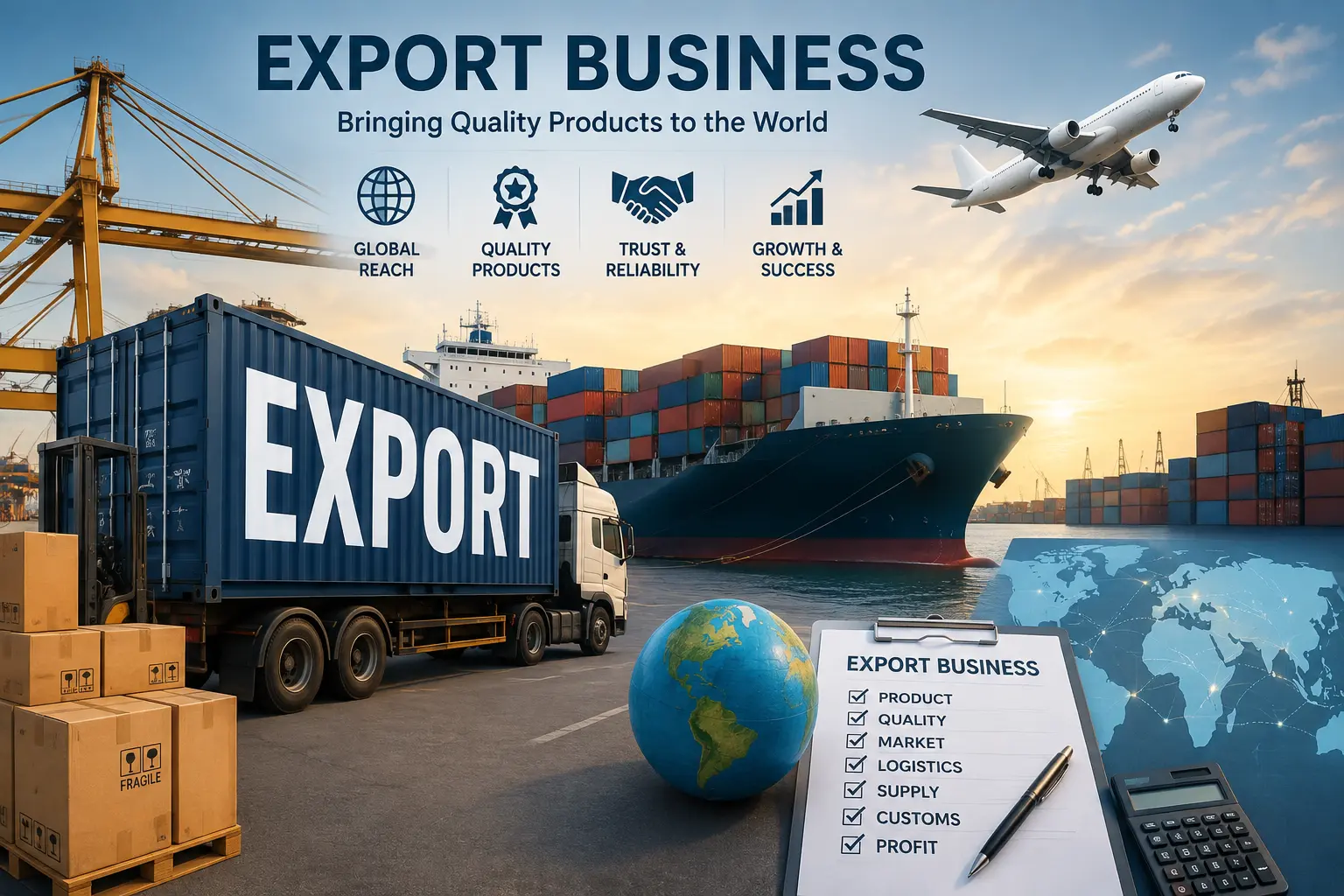
Starting an export business can be an exciting opportunity for a new entrepreneur. However, success depends on choosing the right product, understanding the target market, and following the necessary trade procedures.
The first step is to select an export product. The product should have sufficient demand in foreign markets and should be available at a competitive price. Products such as spices, tea, rice, garments, handicrafts, and various manufactured goods can offer opportunities depending on market conditions
The next step is market research. An exporter should study potential countries, competitors, customer preferences, prices, and import requirements. This research helps the entrepreneur select the most suitable market and avoid unnecessary risks.
After selecting a market, the exporter needs to find buyers. Buyers can be approached through online business platforms, trade exhibitions, industry associations, distributors, and direct communication. Before entering into a major transaction, the credibility of the buyer should be checked carefully.
Documentation is also an essential part of exporting. Depending on the product and destination, an exporter may need business, customs, shipping, commercial, and product-specific documents. Proper packaging and labeling are equally important because goods must reach the buyer safely and comply with applicable requirements.
Finally, the exporter should establish a reliable system for receiving payments and delivering goods. Careful financial planning is necessary because international trade may involve currency changes, shipping expenses, and payment risks.
Therefore, starting an export business requires preparation and patience. A well-researched business with quality products and dependable customers can develop into a successful international enterprise.